




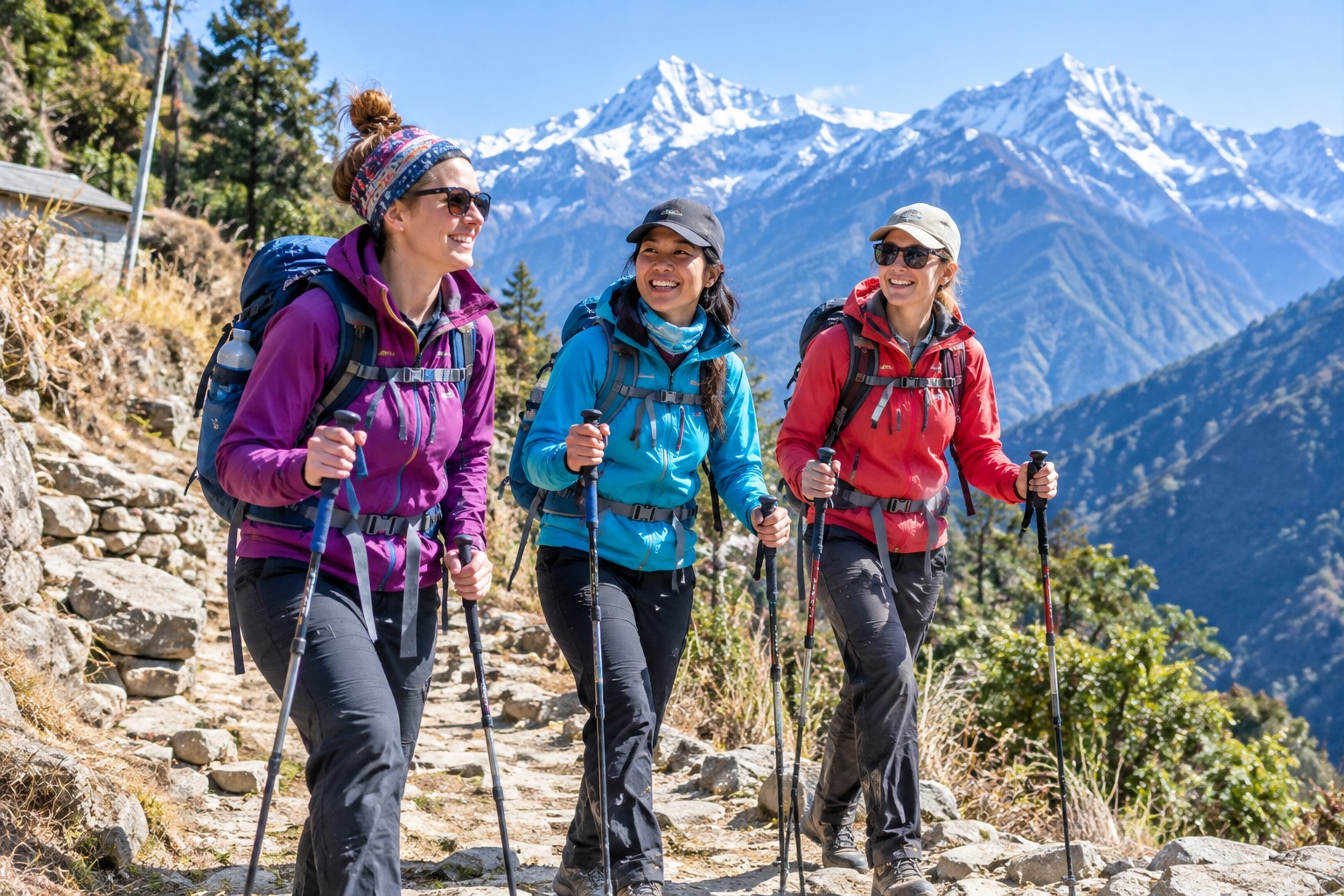
What to Pack for Your Himalayan Adventure
Posted on: Tuesday, November 24th, 2026.Women’s Trekking Packing Guide
What to Pack for Your Himalayan Adventure
By Ama Adventure | Trekking Tips & Advice
Trekking in the Himalayas is an unforgettable experience. From walking along beautiful mountain trails and exploring traditional villages to enjoying breathtaking views of snow-capped peaks, every journey brings something special. However, good preparation is an important part of making your trekking experience comfortable and enjoyable.
As a woman with practical experience in trekking and organising Himalayan adventures in Nepal, I understand that packing for a trek can sometimes be confusing, especially if you are preparing for your first mountain adventure. You may wonder what clothes to bring, how many pairs of socks you need, which personal hygiene products are essential and what equipment you should carry.
I have prepared this women’s trekking packing guide based on my personal experience and practical knowledge of trekking in the Nepalese Himalayas. It also includes additional items women may need during a multi-day trek, such as comfortable sportswear, personal toiletries and menstrual hygiene products.
Whether you are travelling alone, trekking with friends or joining a guided group, this guide will help you prepare properly without carrying unnecessary items. Packing requirements vary depending on the destination, season, altitude, weather conditions and duration of your journey.
1. Clothing: Dress in Layers
Mountain weather can change quickly. You might feel warm while walking during the day but experience cold temperatures in the early mornings and evenings. Dressing in layers is one of the best ways to stay comfortable.
- 2–3 quick-drying trekking T-shirts
- 2 long-sleeved trekking shirts
- 1–2 thermal tops
- 1 warm fleece jacket
- 1 insulated down jacket
- 1 waterproof and windproof jacket
- 2 pairs of trekking trousers
- 1 pair of comfortable trousers for evenings
- 1–2 pairs of thermal leggings
- 1 pair of waterproof trousers
- Sun hat or cap, warm woollen hat or beanie, and a scarf or neck warmer
Choose lightweight, breathable and quick-drying fabrics. Avoid packing too many cotton clothes because they take longer to dry.
2. Women’s Personal Clothing
Comfort is particularly important during long walking days. Choose clothing that allows you to move freely and feels comfortable throughout your journey.
- 5–7 pairs of comfortable underwear
- 2–3 supportive sports bras
- Comfortable sleeping clothes or pyjamas
- Quick-drying undergarments
- Warm socks for sleeping
- Comfortable leggings for relaxing in teahouses
A separate small packing bag for underwear and personal clothing will help keep your luggage organised.
3. Footwear: Choose Comfort Over Fashion
Your footwear can make a big difference to your trekking experience. A good pair of trekking boots provides support, comfort and protection on uneven mountain trails. Make sure your boots are well broken in before starting your trek.
- Waterproof trekking boots
- 4–5 pairs of trekking socks
- 1–2 pairs of warm woollen socks
- Comfortable sandals or shoes for teahouses
- Gaiters (optional)
- Microspikes or ice cleats for icy conditions
4. Bags and Sleeping Equipment
A comfortable daypack is essential for carrying daily belongings, including water, snacks, sunscreen, a camera and extra clothing.
- Daypack (35–45 litres) with a rain cover
- Four-season sleeping bag (recommended rating of 0°C or lower, depending on season and altitude)
- Sleeping bag liner (optional)
- Waterproof bags for clothes and valuables
Sleeping bag rental: You do not necessarily need to bring a sleeping bag from home. Sleeping bags are available for rent in Thamel, Kathmandu, at reasonable prices. Ama Adventure can also help arrange one before your trek.
5. Personal Hygiene and Toiletries
Personal hygiene is important, particularly when trekking in remote mountain villages where shops and facilities may be limited.
- Toothbrush and toothpaste
- Face wash, shampoo and conditioner
- Soap or body wash and moisturiser
- Sunscreen (SPF 30–50 or higher) and lip balm with SPF
- Deodorant, hairbrush or comb, and hair ties or clips
- Hand sanitiser and wet wipes
- Small quick-drying towel
- Toilet paper
Travel-size products are ideal because they save space and reduce luggage weight.
6. Menstrual Hygiene: An Important Consideration for Women
One thing I particularly recommend women prepare before trekking is a small menstrual hygiene kit. Even if you are not expecting your period during the trek, it is always better to be prepared. Mountain villages may have limited access to shops, and your preferred menstrual products may not be available.
- Sanitary pads or tampons
- Menstrual cup, if preferred
- Panty liners
- Intimate hygiene wipes
- Small disposal bags or zip-lock bags
- Personal pain relief medication, if normally used
It is better to carry enough supplies from home or purchase them in Kathmandu before starting your journey.
7. Personal First Aid and Medication
A small personal first-aid kit is useful for dealing with minor problems during a trek.
- Personal prescription medicines
- Basic pain relief medication
- Medicines for stomach problems
- Personal allergy medication, if required
- Blister plasters and antiseptic cream
- Sunscreen and lip balm
Trekking guides commonly carry a basic first-aid kit, but you should bring any personal medication you regularly use. Ask a healthcare professional about medicines you may need for high-altitude trekking.
8. Other Essential Trekking Accessories
- Reusable water bottle or hydration bladder
- Water purification tablets or water filter
- Headlamp with spare batteries
- Power bank and charging cable
- Mobile phone and camera
- Sunglasses with UV protection
- Trekking poles
- High-energy snacks, nuts or protein bars
- Lightweight bandana
- Waterproof pouch for documents and valuables
- Small zip-lock bags
9. Important Travel Documents
Before leaving for your trek, make sure you have all the necessary documents.
- Original passport
- Passport-size photographs, if required
- Travel and medical insurance documents
- Flight tickets
- Photocopy of passport
- Emergency contact details
Keep your passport, money, phone and important documents safely in your daypack.
10. Optional Items for Extra Comfort
These items are not essential but can make your trekking experience more comfortable.
- Thermos flask for hot water or tea
- Lightweight scarf or shawl
- Book or playing cards
- Eye mask and earplugs
- Small personal mirror
- Pee funnel (useful where toilet facilities are limited)
- Extra hair accessories
- Microspikes for icy trails
My Personal Tips for Women Trekking in Nepal
Good preparation is not about carrying more things. It is about carrying the right things. Here are a few practical suggestions I would like to share:
- Pack light: You do not need a different outfit for every day. Choose comfortable and quick-drying clothes.
- Dress in layers: Always carry an extra warm layer because mountain temperatures can drop unexpectedly.
- Look after your feet: Good trekking boots and comfortable socks are worth investing in.
- Prepare your hygiene kit: Keep menstrual products and personal toiletries in a separate pouch.
- Protect your skin: Sunscreen, sunglasses and a hat are important, even on cloudy days.
- Keep essentials close: Carry your valuables, important documents and personal medication in your daypack.
- Stay hydrated: Carry a reusable water bottle and drink regularly throughout the day.
Where Can You Buy or Rent Trekking Equipment in Nepal?
You do not need to purchase all your trekking equipment before arriving in Nepal. Kathmandu has many trekking shops, particularly in Thamel, where you can buy or rent essential equipment. Sleeping bags, down jackets, trekking poles, backpacks and other trekking accessories are commonly available.
If you are unsure about what to bring or rent, Ama Adventure can help you prepare before your trekking adventure begins.
A Final Note from Ama Adventure
I have prepared this guide to share my personal experience and help women feel more confident when preparing for a trekking adventure in Nepal. Every woman has different needs and preferences, so please use this list as a general guideline rather than a strict requirement. Adjust your packing according to your destination, trekking season, altitude and personal comfort.
You do not need expensive equipment or a suitcase full of clothes to enjoy the mountains. Good footwear, suitable clothing, essential personal supplies and a positive attitude are often all you need to get started.
Most importantly, enjoy the journey, take your time, appreciate the beautiful surroundings and make wonderful memories along the way.
Happy Trekking!
Ama Adventure – Your Journey, Our Passion