




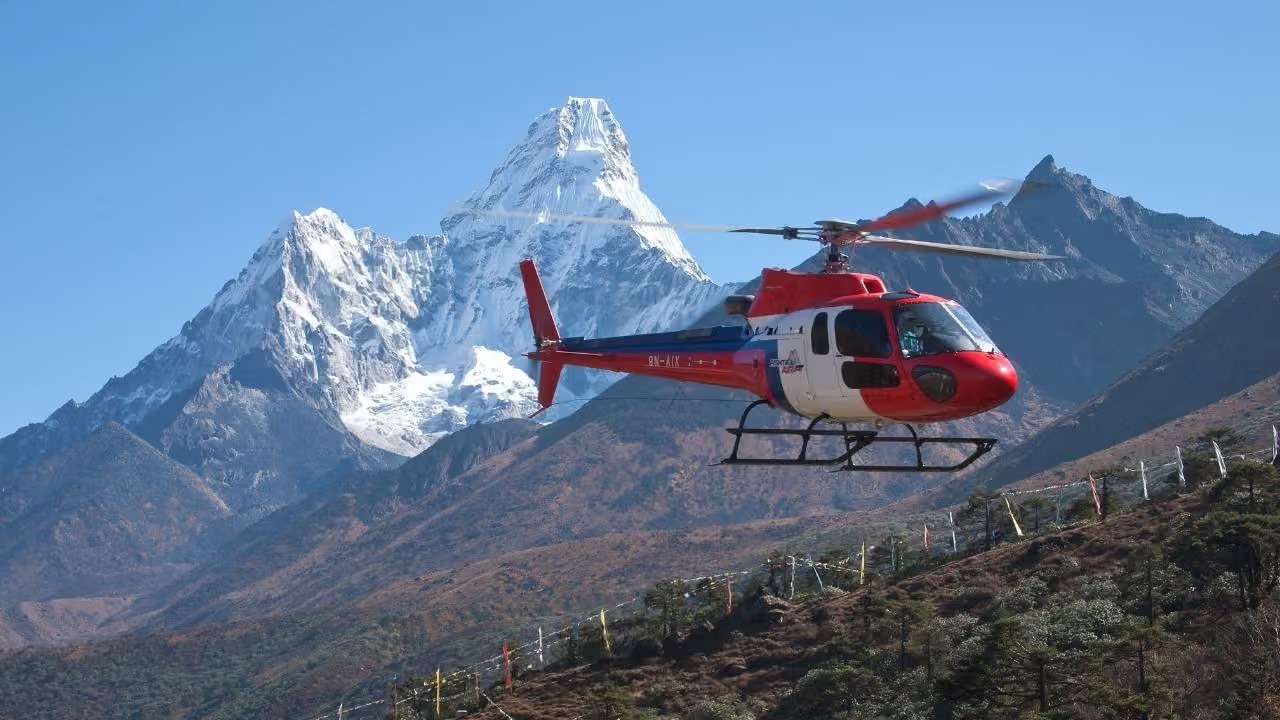
Is the Everest Base Camp Helicopter Return Worth It? An Honest Guide
Posted on: Monday, October 5th, 2026.Is the Everest Base Camp Helicopter Return Worth It? An Honest Guide
The Everest Base Camp helicopter return is becoming a popular choice for trekkers who want to walk all the way to Everest Base Camp but do not want to walk the same trail back to Lukla.
You still complete the main trek to Everest Base Camp at 5,364 meters. The difference is on the way back. Instead of spending several more days walking downhill through the Khumbu, you return by helicopter.
For some trekkers, this can save time and reduce the physical pressure on the body. For others, the traditional walk back is an important part of the experience.
So, is the helicopter return worth the extra cost?
It depends on your budget, fitness, knees, available time and what kind of trekking experience you want.
What Is an Everest Base Camp Helicopter Return?
A helicopter return does not mean you fly to Everest Base Camp.
You still walk the full route from Lukla through Phakding, Namche Bazaar, Tengboche, Dingboche, Lobuche and Gorak Shep before reaching Everest Base Camp.
You also follow the normal acclimatization schedule, which is important at high altitude.
The helicopter only changes the return journey.
After reaching Everest Base Camp and usually visiting Kala Patthar, you return to Gorak Shep and take a helicopter back towards Lukla or another agreed location, depending on the flight arrangement and weather.
This means you experience the main trekking journey on foot but avoid several days of downhill walking.
What Do You Avoid by Taking the Helicopter?
The return from Gorak Shep to Lukla involves a long distance and several days of walking.
Although you are going lower, the descent is not always easy. Your legs have already worked hard for many days, and the trail includes plenty of stone steps, uneven ground and repeated climbs and descents.
There are a few reasons why some trekkers prefer to fly back.
1. Less pressure on your knees
Going downhill can be particularly difficult for people with knee, ankle or other joint problems.
The ascent requires strength and stamina, but the descent can put a lot of pressure on the knees and legs.
If you already know that long downhill walking is difficult for you, the helicopter return can be a practical option.
2. You are already tired
By the time you reach Everest Base Camp, you have already spent many days walking at high altitude.
You may have had less sleep than usual, eaten differently and used a lot of energy during the trek.
The return walk may feel harder than expected even though you are heading towards lower altitude.
3. You have already reached your main goal
For many people, reaching Everest Base Camp and seeing Everest from Kala Patthar are the main goals of the trek.
Once you have completed these parts, you may prefer to save your energy and return by helicopter rather than repeat several days of walking.
However, walking back also has its own advantages.
As you descend, the air becomes warmer and richer in oxygen. You pass through forests, villages and places such as Tengboche and Namche Bazaar.
Some trekkers actually enjoy the return journey more because they feel stronger again as they lose altitude.
So there is no single right choice.
What Do You Get From the Helicopter Return?
You save time
A standard Everest Base Camp trek often takes around two weeks, depending on the itinerary.
Using a helicopter for the return can reduce the number of trekking days.
This can be useful for people with limited holiday time or international flights that need to fit into a fixed schedule.
You reduce the amount of downhill walking
This is one of the biggest reasons people choose the helicopter.
You still have to be fit enough for the ascent, but you do not need to complete the full return journey on foot.
For trekkers who are worried about their knees or recovery after reaching Base Camp, this can make the overall trip more comfortable.
You see the Khumbu from the air
The helicopter also gives you a completely different view of the Everest region.
You have spent many days looking at the mountains from the trail. From the helicopter, you can see the valleys, glaciers, villages and mountains from above.
You may get views of Everest, Nuptse, Pumori and Ama Dablam from a perspective that is very different from the trekking route.
For many travelers, this becomes an extra memorable part of the trip.
You have more time for your return journey
Returning earlier towards Lukla can also give you more flexibility before your international flight.
Weather in the Everest region can affect flights, especially around Lukla.
Having some extra time in your schedule can be useful because mountain weather can change quickly.
How Much More Does It Cost?
The cost of an EBC helicopter return depends on the season, group size, helicopter arrangement and the exact itinerary.
A helicopter return is more expensive than walking back because you are paying for the helicopter operation in addition to the normal trekking arrangements.
Instead of looking only at the daily cost, it is better to consider the total value.
You are paying for:
- Less downhill walking
- Fewer trekking days
- More flexibility with your schedule
- A different view of the Everest region
- Less physical pressure after reaching Base Camp
The right question is not simply whether the helicopter is expensive.
The better question is whether the extra cost is worthwhile for you.
Does the Helicopter Make the Trek Easy?
No.
This is important to understand before booking.
You still need to walk from Lukla all the way to Everest Base Camp.
You still need to spend several days above 3,000 meters.
You still need acclimatization days.
You still need to walk to Kala Patthar if it is included in your plan.
The helicopter only changes the way you return.
If you are not prepared for the uphill trekking, choosing a helicopter return will not solve that problem.
Good physical preparation is still important.
What About Weather?
Helicopter flights in the Everest region depend on weather and visibility.
Cloud, wind, rain and other mountain conditions can affect flights.
For this reason, a helicopter return should never be treated as a guaranteed flight at a particular time.
If the weather does not allow the helicopter to operate, you may need to wait or continue by another option depending on the situation.
This is why it is important to have some flexibility in your itinerary and to discuss the backup plan with your trekking company before the trek.
What About Baggage?
Helicopters have strict weight limits, especially at high altitude.
Your main trekking bag may not always travel with you on the same helicopter.
Depending on the arrangements, your luggage may be carried separately by porter or transported on another flight.
It is therefore important to keep your passport, medication, money, valuables and other important items in your daypack.
Who Should Consider a Helicopter Return?
The helicopter return may be a good choice if you:
- Have knee, ankle, hip or back concerns
- Find long downhill walking difficult
- Have limited holiday time
- Want to reduce the number of trekking days
- Want to experience the Everest region from the air
- Prefer a more comfortable return after reaching Base Camp
- Are concerned about how your body will feel after several days at altitude
It can also be useful for trekkers who are physically capable of completing the ascent but do not want to put unnecessary pressure on their body during the return.
Who May Prefer to Walk Back?
You may prefer the traditional return if you:
- Have enough time for the full trek
- Want the complete trekking experience
- Enjoy walking through mountain villages and forests
- Want to keep the cost lower
- Enjoy the slower pace of returning through the Khumbu
- Feel comfortable with several more days of downhill walking
The walk back is not simply extra distance.
As you descend, you see the landscape change again. The weather becomes warmer, the vegetation becomes greener and your body usually starts to feel stronger.
For many trekkers, this is an enjoyable part of the journey.
Shared Helicopter or Private Helicopter?
Most trekkers choose a shared helicopter seat because it keeps the cost lower.
A private helicopter is much more expensive but can make sense for a private group that wants more flexibility.
If you are traveling with friends or family, it is worth asking your trekking company about both options and comparing the total cost.
When Should You Book the Helicopter?
If you already know that you want to fly back, it is better to discuss it before your trek.
During the main trekking seasons, helicopter seats can become limited.
Some trekkers also ask whether they can decide after reaching Gorak Shep.
This may be possible depending on availability and weather, but it should not be assumed.
If you think you may want the helicopter option, talk to your trekking company before leaving Kathmandu so you understand the price, availability and cancellation conditions.
Is Helicopter Return Safe?
Helicopter flights in the mountains always depend on weather, visibility, altitude and operating conditions.
The decision to fly should always be made by the pilot and the helicopter operator based on the conditions at the time.
It is also important to have travel insurance that covers high altitude trekking and emergency evacuation.
A normal scenic helicopter return and a medical evacuation are two different things, so make sure your insurance covers the type of trekking and altitude you are planning.
Frequently Asked Questions
Do I still have to walk to Everest Base Camp?
Yes.
A helicopter return does not replace the trek to Base Camp.
You still walk from Lukla through the Khumbu and complete the ascent to Everest Base Camp.
Can I take a helicopter directly from Everest Base Camp?
The exact pickup arrangement depends on weather, helicopter operation and local conditions.
Your trekking company should explain the planned pickup point and the alternative options before the trek.
Is the helicopter return good for people with knee problems?
It can be a useful option for people who are concerned about long downhill walking.
However, anyone with an existing medical or joint problem should discuss their condition with a qualified medical professional before undertaking a high altitude trek.
What happens if the helicopter cannot fly?
Mountain weather can change quickly.
If the helicopter cannot operate, you may need to wait for a suitable weather window or continue by foot, depending on the conditions and your itinerary.
Always ask your trekking company about the backup plan before booking.
Can I decide to take the helicopter during the trek?
Sometimes this may be possible if seats are available.
However, availability is not guaranteed, especially during busy seasons.
If you are seriously considering the helicopter, it is better to arrange it in advance.
Is the helicopter return worth the extra money?
For some people, yes.
If you have limited time, joint concerns or simply want to reduce the amount of downhill walking, the extra cost may be worthwhile.
If you have plenty of time and want the full trekking experience, walking back may be the better choice.
Our Recommendation
There is no single answer for everyone.
If your main concern is your knees, recovery, limited time or simply avoiding several days of downhill walking, the helicopter return can be a very practical choice.
If you have enough time, enjoy walking and want to experience the Khumbu from start to finish, walking back is also a great option.
The most important thing is to choose the return option that suits your body, budget and travel plans.
At Ama Adventure, we can discuss both options with you before your trek and help you choose an itinerary that fits your time, fitness and expectations.
An Everest Base Camp helicopter return is not a shortcut to Everest Base Camp.
You still complete the most important part of the trek on foot.
What you are really paying for is a shorter return, less downhill walking and the chance to see the Everest region from the air.
For some trekkers, that makes the extra cost worthwhile.
For others, walking back through Namche, Tengboche and the Khumbu villages is an important part of the adventure.
Both choices can give you an unforgettable Everest Base Camp experience.